The Heritage of French Carpets: Aubusson & Savonnerie
Two Traditions, One Legacy
.jpg)
France gave the world two distinct carpet-making traditions, each extraordinary in its own right. Aubusson, the flat-woven tapestry carpet from the Creuse region in central France, traces its origins to the 15th century. Its cousin, Savonnerie a pile carpet produced using the same knotted technique as Oriental rugs was born in the 17th century at the Savonnerie factory near Paris, initially producing luxury goods for Louis XIII.
Where Aubusson is notable for its tapestry-like flatness and pastoral or mythological scenes, Savonnerie is known for its lush sculptural pile, elaborate arabesques, and monumental scale. Both were initially reserved exclusively for royal palaces and diplomatic gifts.
The Royal Ateliers
In 1627, Louis XIII granted the royal monopoly on carpet production to Pierre Dupont, whose workshop in the former Savonnerie soap factory on the Quai de Chaillot would spend the next two centuries furnishing the palaces of France. Louis XIV commissioned 93 Savonnerie carpets for the Grande Galerie of the Louvre a single project woven over 30 years.
Aubusson received its Manufacture Royale designation in 1665. The town became so synonymous with French textile excellence that an 'Aubusson carpet' is a quality designation recognised across the world to this day.

Design Language
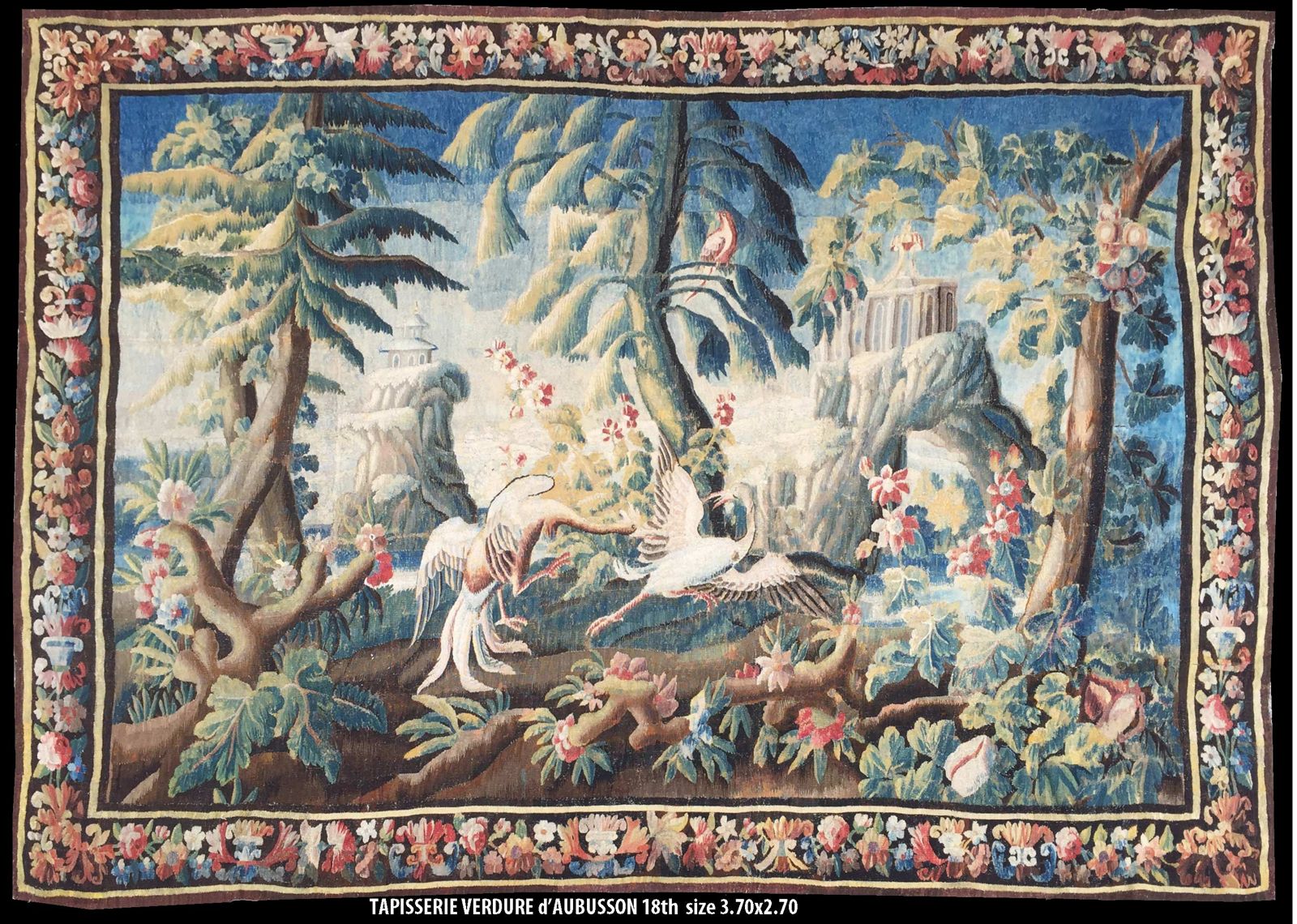
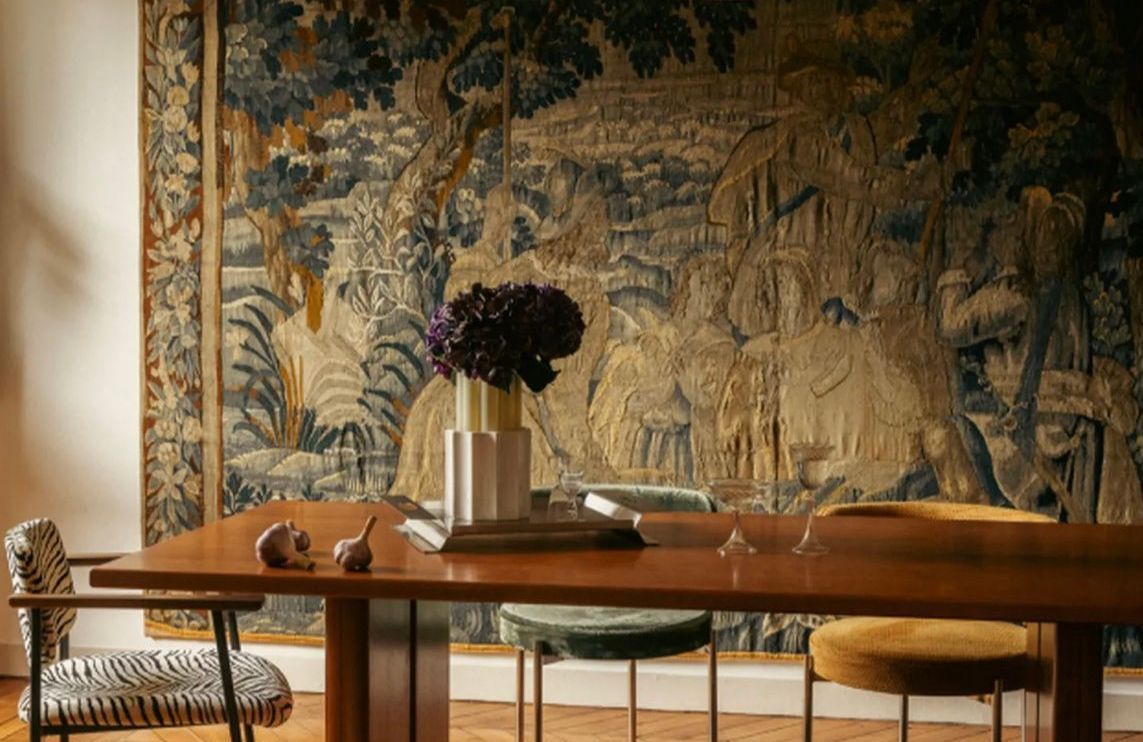
Both traditions share a visual vocabulary rooted in the French decorative arts: central medallions, elaborate borders of acanthus leaves and flowers, cartouches, and figural scenes drawn from mythology, allegory, and nature. The palette was rich deep blues, wine reds, gilded ochres and the overall effect one of theatrical magnificence.
In the 18th century, the palette lightened under the Rococo influence of designers like Boucher and Oudry. The 19th century brought a return to heavier, more architectural patterns under the Empire style.
French Carpets in the Dubai Context
Dubai's interior design culture has a natural affinity with the grandeur of French carpet heritage. The city's appetite for monumental scale, rich colour, and artisanal quality means that a well-chosen Aubusson or Savonnerie piece or a contemporary interpretation by a Aubusson-trained weaver can serve as the defining anchor of a room. In a marble-floored villa or a double-height salon, a flat-woven Aubusson introduces warmth, history, and a very particular European authority.

How Bazar de Ville Can Help

Bazar de Ville works with carefully selected French textile ateliers to source both antique and contemporary interpretations of the Aubusson and Savonnerie traditions. We guide clients through pattern selection, sizing for specific rooms, and the all-important question of palette ensuring that a carpet does not compete with the furniture and wall treatments we curate alongside it. For Dubai clients, we can arrange for samples and full-size mock-ups to be assessed in situ, in your actual space and your actual light.